

It's 6:45 a.m., it's 34 degrees outside, and you're already running late. You turn the key and get nothing but a click. Sound familiar?
We get a lot of dead battery calls once the temperature drops in Mesquite and the rest of the Dallas area. Most of them are easy to fix, and many can be prevented. Here's why it happens and what to do about it.
Quick answer: Cold weather cuts a battery's power right when your engine needs more of it. If your car clicks or cranks slowly on a cold morning, the battery is the likely cause. Get to a safe spot and get a jump start. Then drive 20 to 30 minutes without stopping. If the car dies again, have the battery and alternator tested.
Why Do Car Batteries Die in Cold Weather?
A car battery makes power through a chemical reaction. Cold slows that reaction down, so the battery has less to give. A cold engine also takes more power to turn over.
The AAA Automotive Research Center reports that a battery loses about 35% of its strength at 32°F. On a cold morning, the engine may need up to twice the normal current to start. A strong battery can cover that gap. A weak one can't.
Summer heat sets up the winter failure
For Texas drivers, the real damage usually happens in summer. Heat wears a battery down from the inside. AAA says batteries in hot southern areas typically last about three years. Up north, they may last five or more.
You won't notice the wear in August. Then the first cold snap hits, and a battery that was already weak gives out. The National Weather Service puts the average first freeze at DFW on November 22. For the full story on heat damage, read our guide on how long car batteries last in Texas.
Can a car battery freeze in Texas?
A healthy one almost never will. A fully charged battery won't freeze until about -76°F, according to Interstate Batteries. A fully discharged battery can freeze at or around 32°F.
So a battery you drained the night before is at real risk during a DFW freeze. Look it over before you do anything. Interstate says not to crank or jump a battery that shows bulges, cracks, icicles, or frost on the case or terminals.
Click, Slow Crank, or Nothing? What Your Car Is Telling You
The sound your car makes when you turn the key is a good first clue. AAA's jump start guide uses these signs to sort battery, starter, and alternator problems.
| What happens | Likely cause | What usually helps |
|---|---|---|
| Rapid clicking | Weak or dead battery | Jump start, then a battery test |
| Slow, struggling crank | Weak battery | Jump start, then a battery test |
| One click, bright dash lights | Often the starter | Tow to a shop |
| Starts with a jump, dies after a short drive | Alternator isn't recharging the battery | Tow to a shop |
| Cranks at normal speed but won't start | Probably not the battery | Tow to a shop |
A jump won't fix a bad starter or alternator. In those cases, a tow to your mechanic or dealership is the faster fix.
Warning Signs Your Car Battery Is About to Die
Watch for these before you end up stuck in a parking lot. The list follows AAA's signs of a weak battery.
- Slow cranking. The engine turns over like it's struggling to wake up.
- Clicking when you turn the key. The battery can't give the starter enough power.
- Dim headlights, especially at idle.
- The battery warning light comes on.
- A swollen or bulging battery case, or a bad smell near the battery.
- Stains or corrosion on the battery or its terminals.
- You've already needed a jump. One jump can be bad luck. Two is a pattern.
- Your battery is 3 or more years old. In Texas heat, many don't make it much past that.
6 Ways to Prevent a Dead Car Battery This Winter
- Get it tested before it fails. A battery test shows how much life is left, so you can replace it on your schedule. AAA recommends a yearly test once a battery reaches its third year.
- Keep the terminals clean and tight. Corrosion and loose cables block the flow of power.
- Mix in a longer drive. AAA notes that a car driven mostly on short trips may never fully recharge its battery.
- Shut things off before you shut down. AAA advises turning off lights, wipers, and the heater before you turn off the engine.
- Park in a garage when you can. A battery that stays warmer keeps more of its power.
- Use a battery tender if the car sits. AAA suggests one if you go two weeks or more without driving in winter.
Car Won't Start on a Cold Morning? How to Jump It Safely
First, stay safe. If you're on the road or in a busy lot, turn on your hazards and stay out of traffic.
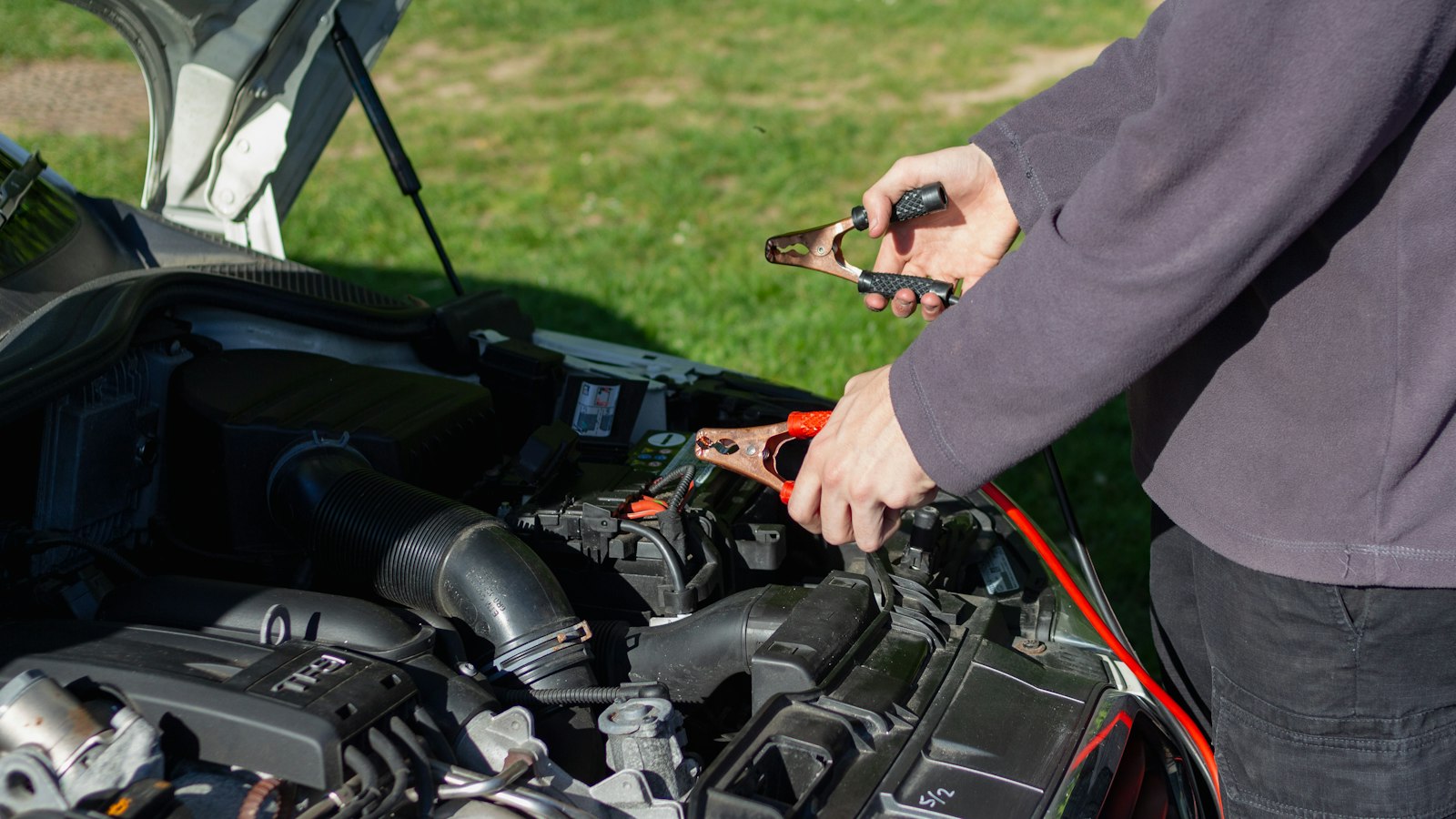
If you've got jumper cables and a helpful neighbor, a jump start may get you going. A wrong connection can throw sparks near the battery or damage your car's electronics. If you're not sure, call a pro.
Don't jump the battery if you see these signs
AAA warns against a DIY jump when:
- The battery case is cracked or bulging.
- You smell rotten eggs near the battery. That points to leaking acid and possibly explosive gas.
- You can't work clear of traffic, or it's too dark or foggy to see well.
Add two more. Skip the jump if the battery may have frozen overnight. And if either car is a hybrid or EV, check the owner's manual first. AAA warns that jump-starting another car can destroy their electronics.
If you jump it yourself, follow this order
- Step 1: Red clamp to the positive (+) post on the dead battery.
- Step 2: Other red clamp to the positive (+) post on the good battery.
- Step 3: Black clamp to the negative (-) post on the good battery.
- Step 4: Last black clamp to clean, unpainted metal on the dead car. Keep it off the dead battery.
- Step 5: Let the good car run three to five minutes. Then try to start yours.
Once it starts, remove the clamps in reverse order. If it still won't start after three tries, stop. AAA says the battery has likely failed and needs to be replaced.
How long to drive after a jump start
AAA says a continuous drive of 20 to 30 minutes is usually enough. Keep the AC and rear defroster off while you drive. If your battery is more than three years old, it may not hold a charge overnight. Get it tested that day if you can.
Dead Battery in Cold Weather FAQs
Can a jump start fix a dead battery in cold weather?
Often, yes, if the battery is healthy and just drained. A jump won't fix a battery that's worn out, frozen, or damaged. It also won't fix a bad starter or alternator. A battery test after the jump tells you which problem you have.
Is a 20 minute drive enough to charge a battery after a jump?
It's the low end. AAA calls for 20 to 30 minutes of continuous driving, with the AC and rear defroster off. A quick trip around the block isn't enough. An older battery may still be dead the next morning.
Why does my car click but not start?
Rapid clicking usually means the battery can't give the starter enough power. A single click with bright dash lights points more toward the starter.
At what temperature does a car battery freeze?
It depends on the charge. A fully charged battery holds out until about -76°F. A fully discharged one can freeze at or around 32°F. That's why a drained battery is the one at risk on a freezing DFW night.
Why does my battery keep dying overnight?
Start with the simple causes. Check for a light left on, and check the battery's age. A battery past three years may not hold a charge overnight. If the battery tests good, something may be drawing power while the car is off. Shops call that a parasitic drain, and a mechanic can trace it.
Should I replace my battery after one jump start?
Not always. If you left the lights on, a healthy battery may bounce back after a good drive. If it's three or more years old, or it dies again within a few days, get it tested.
Stuck With a Dead Battery in Mesquite?
If you'd rather not handle the cables yourself, we can help. Around the Clock Towing is a Mesquite tow company that offers 24/7 jump starts as part of our roadside assistance. We test the battery after every jump. If a jump won't fix it, we can tow your car to your shop. See our coverage area for the cities we serve.
Call (214) 600-3312, any hour of the day.